Be Part of the Solution: Respect the Wonders of the Night
Night Sky Etiquette is essential to keeping our pastime of chasing the Northern Lights sustainable.
It’s not only important to protect wildlife, nature, and people living nearby on our Aurora Chases, but good etiquette at night may also help you see the Aurora in brighter detail — maybe even in vivid color!
Be part of the solution! We don’t want Aurora Chasers to develop a bad name. Instead, we hope our community can be part of the reason people feel motivated to open spaces to the public, provide more opportunities for viewing natural wonders, and give greater access to our stunning night skies.
Please take a moment to review the basics of Night Sky Etiquette. Thank you for being a great member of the community!
Night Sky Etiquette
- Treat others with respect, even more so than during the day.
Every individual has their own reaction to the darkness, and there is no way you can know what a person may be experiencing. Please carry the utmost respect for people, wildlife, and nature on the chase. Respect comes first. - Leave no trace.
If you carry anything outside with you, please ensure you carry it back to your vehicle to dispose of the remains properly. - Minimize the impact of artificial lights, especially shining light at people.
The darker your environment, the better you will see the Aurora. Dim your headlights as soon as it is safe to do so, park far away from viewing areas if you need to use light, and bring gear designed for night experiences, such as a headlamp with a red-light option. If you are with a group chasing try to coordinate when a portion of the group leaves. - Avoid walking in front of cameras, even if no one is there.
At night sky events, you may see many photographers and videographers at work. Always take a few steps to walk behind each camera or tripod, you never know when a time-lapse may be hard at work, even if no one is there. - Try to avoid using cell phones, devices or other sources of light beside photographers and others during an event.
If you need to use a light source, it’s best to walk away from nearby night sky viewers and photographers BEFORE you turn on the light, to help everyone sustain good night vision. - Do not use private property or touch anyone else’s personal property without permission.
Before you use private property, please get special permission from the owners to visit the land at night. This will help you avoid breaking the law and keep you out of harm’s way. In addition, respect the property of your fellow night sky viewers or photographers. Please do not move any camera equipment or personal property without permission. - Embrace a spirit of curiosity and learning.
If you are joining others for a large, group experience, it is unrealistic to expect total darkness while beginners learn the game. Please let others learn at their own pace. Avoid yelling at people to correct their behavior, as this does not improve the experience for anyone. Please embrace the spirit of learning as a group. - Bring generosity, be friendly, and foster a welcoming atmosphere.
Every night sky viewer at some point on their journey experiences a problem where they may need help. Be generous, if you can. Refrain from judging people. And take the initiative to create a friendly atmosphere in the dark. You can make countless friends under the stars this way, and you never know when you may need this kindness in return.
For more on Night Sky Etiquette, visit the International Dark Sky Association.
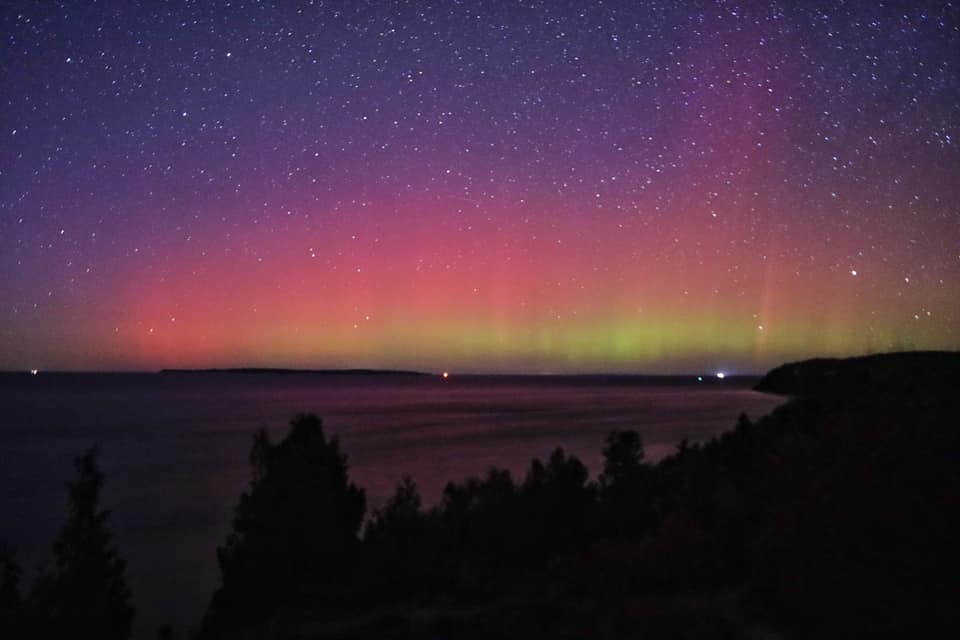
The photograph featured here is by Karen Farrell, taken at Sleeping Bear Dunes National Lakeshore on 9/30/24.
How to Stay Safe While Chasing
Advice from Seasoned Aurora Chasers
Source: Aurora Handbook for Citizen Science, by Katie Herlingshaw et. al.
https://doi.org/10.5281/zenodo.13931939
Learn how to stay safe when taking aurora photos, how to decide when to go out, and advice on etiquette from seasoned aurora chasers.
Staying Safe
“As an aurora photographer, heading out into the dark requires thoughtful planning and preparation. To ensure a safe and successful experience, consider these tips.
Before You Leave:
- Inform Someone: If you are venturing out alone, let someone know your plans, including your location and expected return time. Share your GPS location via a phone app. Ideally, bring a friend to help keep an eye out for potential dangers and provide support if needed.
- Preparation is Key: Ensure your phone is fully charged and bring a charger. Do not forget to pack food and drinks to maintain your energy. Check that your vehicle’s fuel tank is full before departing, and pack a headlamp for visibility in low-light conditions.
- Scout Your Location: Visit your intended site during the day to identify potential obstacles, such as rocks or steep drop-offs. Be mindful of light pollution; tools like www.lightpollutionmap.info can help you find darker areas. Aim for a location that is safe for extended stays.
- Weather: Check the weather for where you are headed. Make sure you have appropriate clothing for the chase. Remember it can get cooler or cold late at night.
- Access Permissions: Confirm that you have permission to access your chosen location. Be aware if you are going into parks if gates get closed and or locked. Familiarize yourself with local laws regarding public and private property access, and select a site away from traffic.
- Plan for Connectivity: Cell service may be spotty in remote areas, so download maps before you leave. If you frequent areas with poor reception, consider a cell phone booster for your vehicle. For reliable communication and emergency assistance, consider purchasing a device that can send texts and trigger an SOS via satellite.
While You are Out There:
- Wear Reflective Clothing: If photographing alone, opt for reflective clothing for safety. If shooting with a group, remember that reflections may appear in their photos.
- Wildlife Awareness: Be aware of local wildlife and take precautions to deter larger animals while protecting yourself from smaller pests. If you are away from your vehicle, consider having a spotter. Carry legal protection for larger wildlife, if necessary. Your hearing can be a critical defence—make noise or use a spotlight if you detect animals. If you are alone in a high-risk area, set up your camera and retreat to your vehicle, using an intervalometer or remote shutter release to monitor your shots.
- Insect Protection: To fend off mosquitoes and other pests, consider using a repellent device to create a bug-free zone while you work.
- Footwear: Slip-on boots are an excellent choice. They allow you to tuck in your pants for protection against insects and poisonous plants, and they make it easier to navigate through water or mud.
- Cold Weather Precautions: Stay warm during cold photography sessions by using heat packs inside your clothing. Mittens typically offer more warmth than gloves, but combining both allows you to easily remove mittens for camera adjustments. Dress in layers with wool, as trapped air provides great insulation. Pay special attention to your face, nose, ears, toes, and fingers, as these areas are especially vulnerable to frostbite. If you are out with other people, consider regularly monitoring each other’s face for frostbite. If your boots have enough space, wearing two pairs of wool socks can enhance warmth significantly. A snug, windproof wool hat will also help retain body heat. When setting up your camera, position it outside the vehicle and use an intervalometer(timer) or remote shutter release from inside. Your running car can keep you warm, but be aware that it may muffle sounds, making it difficult to hear nearby wildlife. In extreme cold, prioritize safety over getting the perfect shot; always consider the windchill factor and dress appropriately. Being well-prepared allows you to enjoy your time outdoors longer. Additionally, keep a sleeping bag in your car as a precaution in case of a breakdown, ensuring you stay warm while waiting for assistance.”
Aurora Chaser Etiquette
“When chasing the aurora, it is important to be considerate of others around you. This means avoiding the use of bright lights, loud music, or any loud noises that could disturb the experience for others. Refrain from using high beams, and if possible, cover your camera’s light sensor with black tape to prevent unnecessary light (such as the flash from the self-timer). Be mindful that using your camera’s live view function can disrupt others’ night vision. If you go in and out of your vehicle during the observation, learn how you can shut off your car interior lights for this, or cover the front of your vehicle with a blanket. If possible, favor using red rather than white light with your headlamp, as red light is less disturbing for your (and others’) night vision. As well as considering other people, be mindful of the environment and avoiding disturbing wildlife as much as possible, minimize the impact on the nature and vegetation around you, and take back all trash when you leave.
When reviewing your photos, if you are unsure about identifying a particular phenomenon do not make definitive claims. Instead, pose it as a question to encourage discussion. Be respectful when others seek your opinion on their photos, offering constructive feedback without being dismissive. Always ask for permission before sharing someone else’s picture, ensuring you respect their ownership and effort.”
10 Essentials for Travel
Heading out to chase the Northern Lights? We recommend that you be sure to pack the 10 Essentials, as described by the National Park Service!
“The 10 Essentials are a collection of first aid and emergency items that can help you in the event of minor injuries, sudden weather changes, or unexpected delays. The 10 Essentials are only the basic items you should have with you. You may need additional items depending on the activity in which you participate (e.g. hand warmers, chargers, life jacket, bug spray, personal locator beacon).”
More Perspectives
Updated December 1, 2025
 Michigan Aurora Chasers