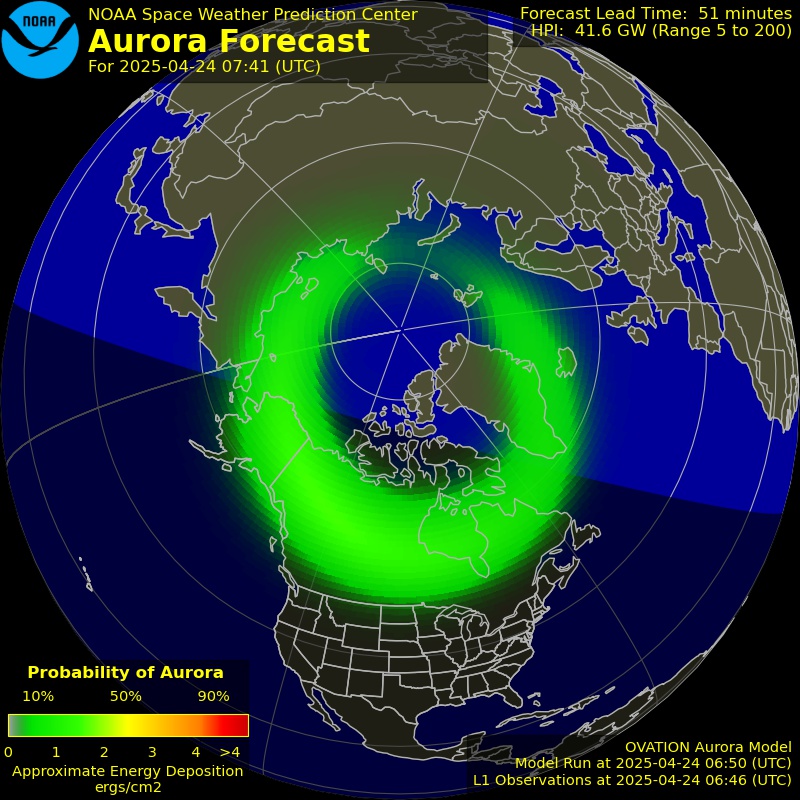
According to NOAA’s Space Weather Prediction Center, the OVATION model provides a 30 to 90 minute forecast of the location and intensity of the aurora. The forecast lead time is the time it takes for the solar wind to travel from the L1 observation point to Earth. It is also referred to as a now-casting tool.
Variations of the Ovation Model
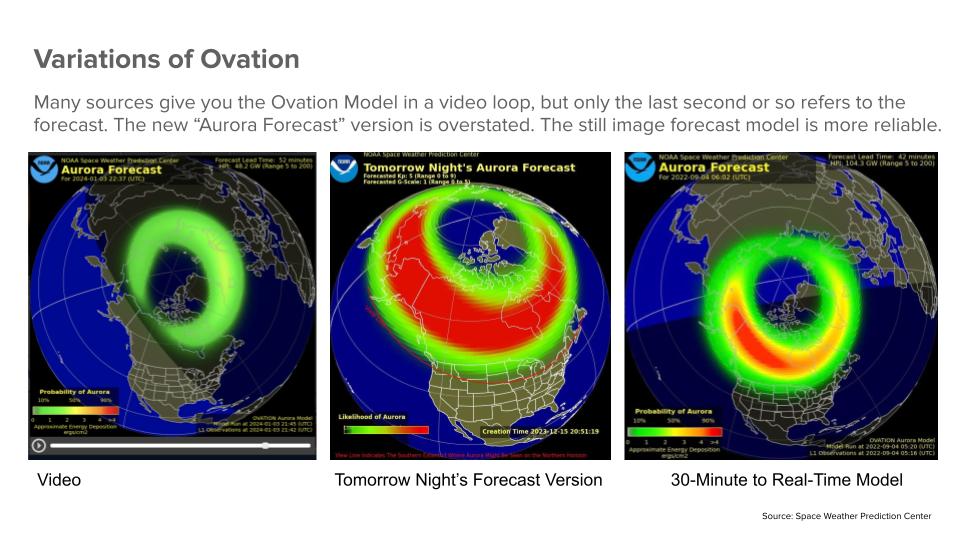
There are many variations of the Ovation Model forecasting tool, and you’ll see versions of it in your apps, including a very dark red, yellow or green pixelated version on the NOAA Space Weather Prediction Center homepage. Unfortunately, the Ovation Model when presented as an early forecast tool is very misleading, experienced Aurora Chasers agree.
Like any forecasting method, there is a margin of error.
It’s best to avoid using the pixelated version in the middle of this illustration. Instead, try using the experimental tool, a now-casting model, which is linked on our website: Quick Links
Scroll down for more on this 30-minute now-casting tool.
What to Avoid
Save Community Leaders and Yourself Disappointment & Headaches
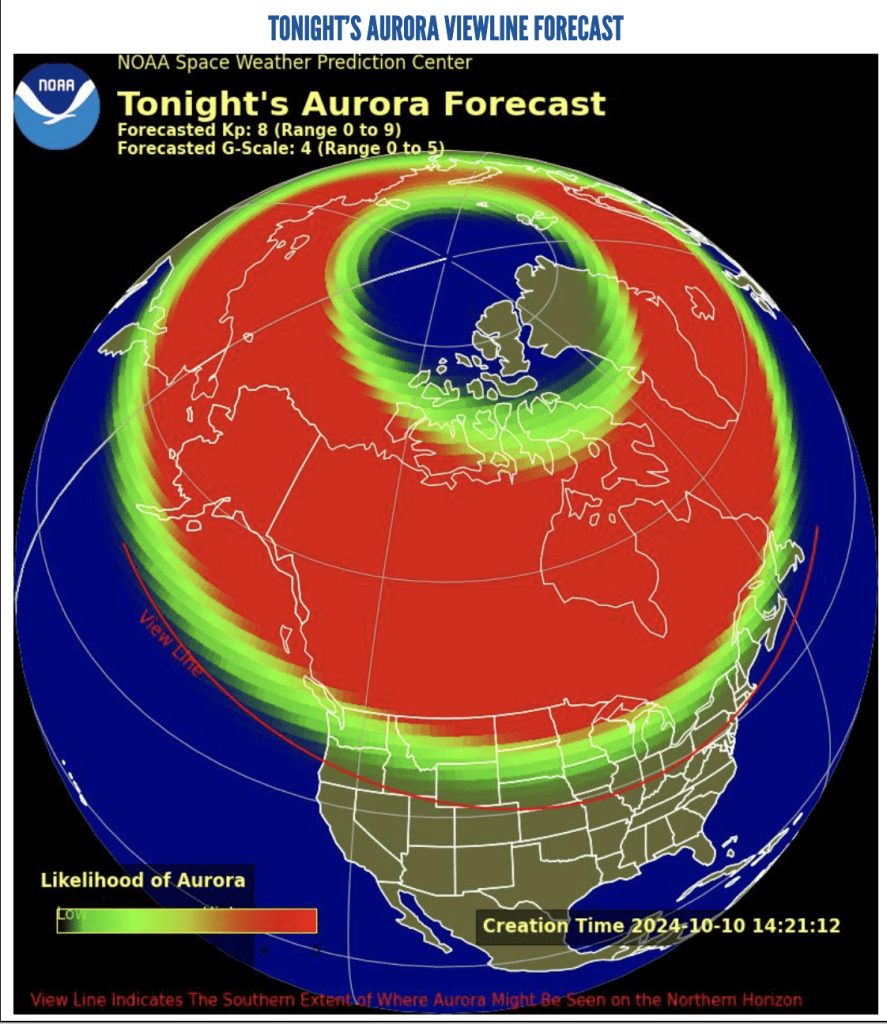
Experienced Aurora Chasers agree that this pixelated graphic is very misleading, and notice that it also gives you a Kp forecast, not the hemispheric power. Please try to avoid using or referring to the graphic below, EVEN THOUGH it is used on the national forecasting agency’s website:
A Better Version of the Ovation Model
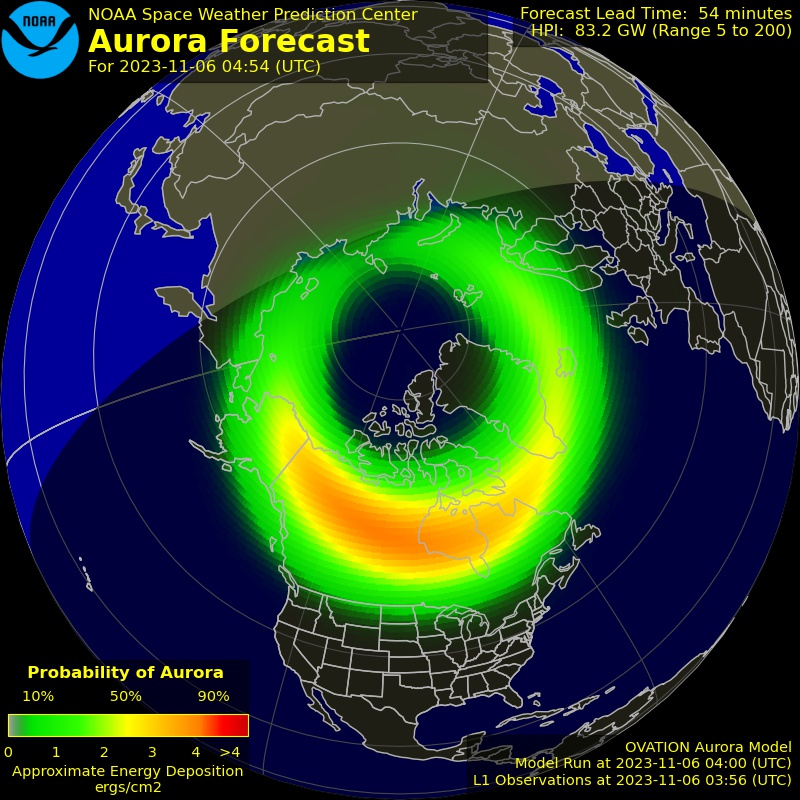
In the Michigan Aurora Chasers, we believe that the 30-minute now-casting product from the SWPC is a better version of this forecasting model. Ending in the characters .jpg, there is a website that you can refresh any time of day to see what the projected conditions are for Earth’s atmosphere in 30-90 minutes, with two caveats: The first caveat is that the Bz component stays aligned. The second caveat is that there are no information input errors in the model.
Check out the link and refresh it over time to see how this version of the Ovation Model works:
https://services.swpc.noaa.gov/images/aurora-forecast-northern-hemisphere.jpg
Below is an image showing how outstanding conditions look on this interactive now-casting version, for comparison:
Watch this video to learn how to read the 30-minute forecasting version of the Ovation Model:
About the Ovation Model
According to NOAA’s Space Weather Prediction Center, the Ovation Model uses two maps to show the North and South poles of Earth respectively. The brightness and location of the aurora is typically shown as a green oval centered on Earth’s magnetic pole. The green ovals turn red when the aurora is forecasted to be more intense. The sunlit side of Earth is indicated by the lighter blue of the ocean and the lighter color of the continents.
Aurora can often be observed somewhere on Earth from just after sunset or just before sunrise. The aurora is not visible during daylight hours. The aurora does not need to be directly overhead but can be observed from as much as a 1000 km away when the aurora is bright and if conditions are right.
The aurora is an indicator of the current geomagnetic storm conditions and provides situational awareness for a number of technologies. The aurora directly impacts HF radio communication and GPS/GNSS satellite navigation. It is closely related to the ground induce currents that impact electric power transition.
For many people, the aurora is a beautiful nighttime phenomenon that is worth traveling to northern regions just to observe. It is the only way for most people to actually experience space weather.
Read more or view the video version: https://www.swpc.noaa.gov/products/aurora-30-minute-forecast
 Michigan Aurora Chasers